StoryLocal news
Pritzker Wins a Third Term in a Race the Market Had Treated as Settled for Weeks
Kalshi had a Democratic governor at 98% on November 2, 2026, and the Associated Press called the race for JB Pritzker the moment polls closed a day later, which means the last price before Election Day was already a call.
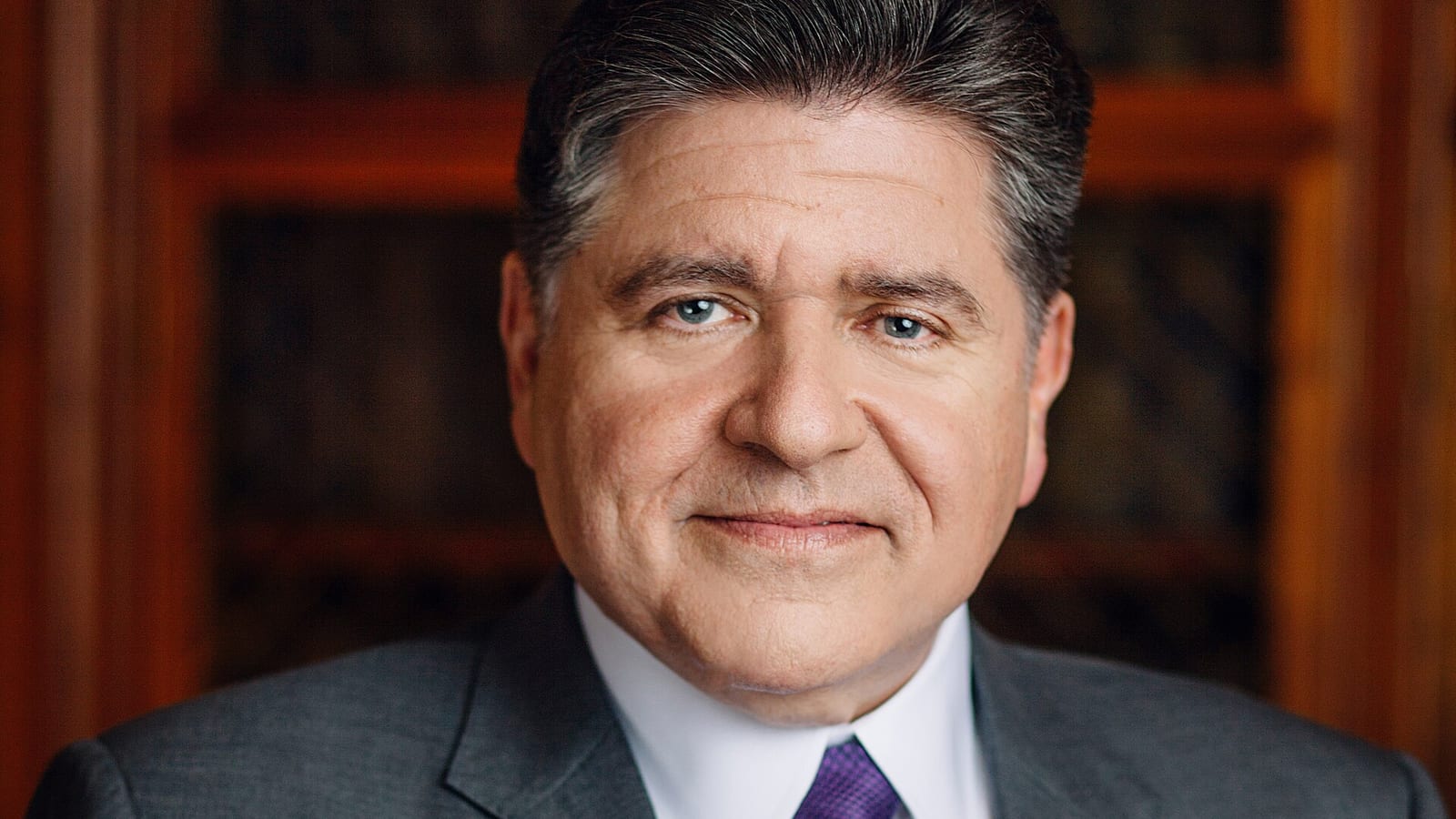
Gov. JB Pritzker won a third term on November 3, 2026, beating Republican Darren Bailey for the second time, and the Illinois governor election results 2026 were settled almost before they began: the Associated Press called the race for Pritzker as soon as polls closed at 7 p.m. Central, Capitol News Illinois reported, with no votes yet counted, according to Block Club Chicago. As of November 5, 2026 the returns are unofficial, and they will stay that way until the election authorities finish their canvass.
As of 9:30 p.m. on election night, with 61% of votes counted, Pritzker led Bailey by roughly 60% to 37%, a margin of more than 500,000 votes out of about 2.7 million counted, with independent Collin Corbett at about 3%, according to Capitol News Illinois. By the morning of November 4, 2026, with 91% of the vote in, CBS News Chicago put Pritzker's lead at 23 points; he beat Bailey by just under 13 points in 2022. Christian Mitchell, his running mate, is now the lieutenant governor-elect, and Capitol News Illinois reported that Pritzker becomes the first Democrat elected to a third term as governor of Illinois and the first governor of either party to win one since Republican Jim Thompson in 1982.
What the Governor Market Had Priced Going In
The market had stopped treating the race as close long before the polls opened. On the evening of November 2, 2026, the last read before Election Day, Kalshi had the Democratic Party at 98% to win the governor's office, the cheaper of the two venues, while Polymarket had it at 99.1%. On the other side, Polymarket had the Republican Party at 1% and Kalshi at 2%. That means a reader of the board the day before the election was being told a Bailey win was priced at 1% to 2%, and the call at 7 p.m. confirmed the price rather than surprising it.
The number hardly changed through the final weeks. Kalshi's price for a Democratic win, the cheaper side each time it was read, sat at 98% on October 16, 96% on October 19 and October 20, 97% on October 23 and 98% again on October 29 and November 2. That covers the only Pritzker-Bailey debate and record early voting, which means neither event changed what traders thought would happen; both changed only how many people would take part.
The contract also drew its heaviest trading at the end. On November 5, 2026, Kalshi counted 1,048,661 contracts traded on the market over its life, 399,811 of them in the previous 24 hours, and Polymarket counted $72.7K traded over the same life. Both venues quoted the Democratic contract at 100% by November 5, 2026 and the market is listed as resolved, which means the price that sat at 98% before the vote has gone to its settlement value. The governor market page on this site, the Illinois governor market, carries the board as it now stands.
What a 98% Price Did Not Say
A winning-party contract pays on one thing, the party of the winner, and so it says nothing about the size of the win. At 98% on Kalshi on November 2, 2026, the board was consistent with a Pritzker win by five points or by 25, and the unofficial returns showed a margin close to twice his 2022 one. That is the main limit of the price as a forecast: it was right about the outcome and silent about the margin, which is the part of the result that will be argued over during his third term and in any national campaign.
The other thing the price could not see was where the votes would come from. Capitol News Illinois reported that Pritzker led Cook County 77.3% to 19.8% as of 8:45 p.m., led in the suburban collar counties and was on pace to be the first Democrat to carry McHenry County in a governor's race since 1852 if the results hold. He also led in Sangamon County, which had not voted Democratic since 1964, and in McLean, Peoria and St. Clair counties, while Bailey led most counties outside the Chicago region. Those are unofficial election-night figures, and the county canvasses can still move them.
How the Campaign Ended
Bailey spoke to supporters in Effingham at 9:30 p.m. on election night. "I have no regrets," he said, according to Capitol News Illinois, which reported that his running mate, Aaron Del Mar, had told reporters shortly before 9 p.m. that the ticket would not concede until the votes were counted. Pritzker gave his victory speech in a Navy Pier ballroom soon after polls closed.
The money gap was the defining fact of the general election. Capitol News Illinois reported that Pritzker put more than 90 million dollars into his campaign account this cycle and outspent Bailey by at least 25 to 1, that Bailey could not afford television advertising, and that Republican donor Richard Uihlein, who gave Bailey 12 million dollars directly in 2022, gave 6,900 dollars this time. Bailey had opened his second campaign by temporarily renting an apartment in Chicago's South Loop and apologizing for calling the city a "hellhole" in 2022, the same report said.
The rematch fits the pattern the board described all autumn. The earlier stories on this site, on the only Pritzker-Bailey debate and on the early-vote surge, both found the market reading each event as a replay of 2022 rather than as a sign of a closer race, and the result bears that out.
What Is Still Pending
Every figure above is unofficial. The State Board of Elections' calendar lists November 5, 2026 as the deadline for each election authority with a website to post how many ballots remain uncounted, 48 hours after polls closed, and November 10, 2026 as the last day a provisional voter may submit information to verify a registration. Late-arriving mail ballots are still being tallied, Block Club Chicago reported: the Chicago Board of Elections had 109,215 of 242,230 requested mail ballots back at its last report on November 4, and it has 21 days to finalize the city's results and turnout, according to CBS News Chicago.
None of that is close to changing the outcome; it will change the final margin. The winning-party market does not depend on the margin, and the governor's office does not change hands. What it settles is how large Pritzker's win was, which Capitol News Illinois reported was on pace to be the highest vote share for a Democratic governor since Adlai Stevenson II in 1948.
What Comes Next for the Governor
Pritzker told reporters on Election Day that he was already thinking about the fall veto session, where he wants legislation to keep the Bears in Illinois and to regulate data centers, Capitol News Illinois reported, and the day after the vote he did not directly address a 2028 presidential campaign when asked, according to CBS News Chicago. The next dated beat in the count itself is November 10, 2026, the last day for provisional voters to document their registrations, after which the county canvasses turn the unofficial figures into official ones. The rest of the statewide ballot is on the Illinois elections page, and the companion race for the U.S. Senate seat is covered on the Illinois Senate market.
Questions readers are asking
Who won the Illinois governor race in 2026?
JB Pritzker, a Democrat, won a third term over Republican Darren Bailey on November 3, 2026. The Associated Press called the race as polls closed at 7 p.m. Central, and the results remain unofficial until the canvass.
What did prediction markets say before the Illinois governor election?
As of November 2, 2026, Kalshi had the Democratic Party at 98% to win the governor's office and Polymarket had it at 99.1%. Polymarket had the Republican Party at 1% and Kalshi at 2%.
How big is Pritzker's lead in the unofficial count?
CBS News Chicago reported a 23-point lead with 91% of the vote in on the morning of November 4, 2026, against a margin of just under 13 points over Bailey in 2022.
When will the Illinois election results be final?
Not yet. November 10, 2026 is the last day for provisional voters to submit registration information under the State Board of Elections' calendar, and the Chicago Board of Elections has 21 days to finalize the city's results.