StoryLocal news
Illinois Appeals a Federal Order That Bars Its Gaming Board From Enforcing State Law Against Kalshi
Judge Martha M. Pacold's October 30, 2026 order bars Illinois officials from enforcing four gambling provisions, including licensing, fees and taxes, against sports event contracts on CFTC-regulated exchanges, which puts the Gaming Board under a federal order while Illinois appeals to the Seventh Circuit.
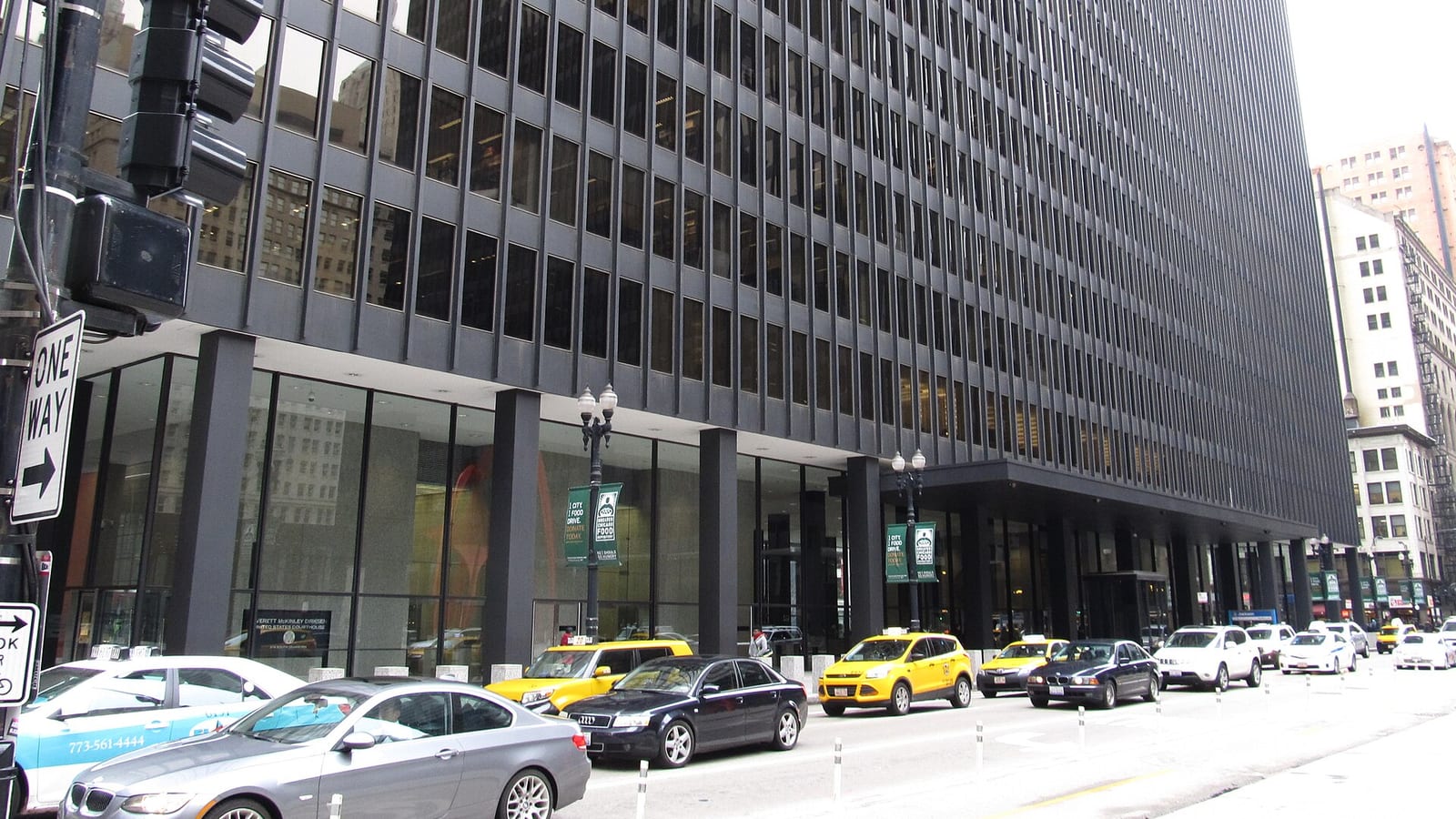
A federal judge in Chicago has barred Illinois from enforcing its sports-wagering law against Kalshi and other exchanges regulated by the Commodity Futures Trading Commission, and the state has already asked a higher court to undo the order. Judge Martha M. Pacold of the Northern District of Illinois entered the preliminary injunction on October 30, 2026, and the same day lawyers in Attorney General Kwame Raoul's office filed a notice of appeal to the U.S. Court of Appeals for the Seventh Circuit. Illinois's appeal of the Kalshi injunction asks that the order be "reversed and vacated."
By November 3, 2026, the same order stood on all three dockets. It was entered as Doc. 105 in United States of America v. State of Illinois, No. 1:26-cv-03659, and as Doc. 64 in KalshiEX LLC v. Raoul, No. 1:26-cv-07363, and the notice of appeal (Doc. 106 on the first docket) says the same order was entered as ECF 98 in Coinbase Financial Markets, Inc. v. Raoul, No. 1:25-cv-15406. It binds Illinois's own officials: the State of Illinois, Governor JB Pritzker, Attorney General Raoul, Illinois Gaming Board Chairperson Dionne R. Hayden, Board members Sean Brannon, Stephen R. Ferrara and Caleb J. Melamed, and Board Administrator Marcus D. Fruchter, each named in an official capacity. That is what makes the order matter in Illinois: it decides, for now, what the state's gaming regulator and its chief law officer may do about sports event contracts offered to people in Illinois.
What the Illinois injunction bars
The operative paragraph is one sentence. The defendants, "as well as their successors, agents, and employees, are hereby preliminarily enjoined from enforcing 230 ILCS 45/art. 25, et seq., 720 ILCS 5/28-1(a), 230 ILCS 10/18(a)(1), and 11 Ill. Admin. Code 1900.1210(a), as related to the trading of swaps, including sports event contracts, listed on or available through Designated Contract Markets and Futures Commission Merchants regulated by the Commodity Futures Trading Commission, including by enforcing licensing requirements, associated fees, taxes, and related criminal provisions, or by engaging in any criminal or civil enforcement actions, subpoena process, or other compulsory investigative process."
The first two citations are the sports-wagering article of the Sports Wagering Act and the gambling section of the Illinois Criminal Code, the same two laws the Gaming Board cites in its cease-and-desist letters. RG, a gambling-industry news site, describes the other two as a section of the Illinois Gambling Act and a Gaming Board internet wagering rule.
Three features of the sentence matter most. It names no exchange: it covers contracts "listed on or available through" exchanges and brokers the CFTC regulates, so its reach turns on that federal status rather than on a company's name. It reaches money as well as licensing, with "associated fees, taxes" written into the order. And it reaches investigations: "subpoena process, or other compulsory investigative process" is barred alongside civil and criminal enforcement.
In a minute entry the same day (Doc. 104), Judge Pacold wrote that "the motions for preliminary injunction [31], [51], [60] are granted. The proposed preliminary injunction is adopted." On the Kalshi docket the matching entry (Doc. 63) grants Kalshi's motion, [19]. The wording of the order came from the parties: on October 2 the court had told them to "confer and file a proposed injunction" by October 29, and the judge adopted the proposed injunction submitted to the court.
Why the Chicago court ruled against the state
The injunction carries out a 28-page Memorandum Opinion and Order of October 2, 2026 (Doc. 99 in the CFTC case). Coinbase, which the opinion says partnered with Kalshi so that its users can buy and sell contracts listed on Kalshi's platform, brought one case. The United States and the CFTC sued the state on April 2, 2026, joined as intervenors by the Coalition for Fair Markets and North American Derivatives Exchange, Inc., which does business as OG. Kalshi filed the third in June 2026. Judge Pacold decided all three together.
Her conclusion on the law: "Plaintiffs have demonstrated that Kalshi is a designated contract market, that its core sports-related contracts are 'swaps,' and that Illinois is likely attempting to exercise control over Kalshi's sale of those 'swaps.' Much of Illinois law likely conflicts with the Commodity Exchange Act and is accordingly likely preempted." Her closing passage, which RG and other trade outlets repeated after the injunction was entered, begins: "Many of the financial instruments at issue are likely swaps as defined by the Commodity Exchange Act." In the same sentence she added that "they just happen to be swaps that people find entertaining and fun."
The word that runs through the opinion is "likely." A preliminary injunction rests on a finding that the plaintiffs are likely to win, not on a final judgment, and on October 2 the court granted the motions "in part" and continued them in part. The October 30 order completes that ruling; it does not end the cases.
The exchange-wager tax and the Gaming Board's letters
Illinois changed its law while the cases were pending. According to the opinion, the Fiscal Year 2027 budget amended 230 ILCS 45/25-90 to add a transaction fee on every "exchange wager," defined as a contract or swap "offered, traded, or executed on a prediction market or exchange tied to a sporting contest or sporting event": 1.75 percent on an exchange's first five million exchange wagers in a fiscal year and 3.5 percent after that. On October 2 the judge held that question back for more argument.
The argument never happened. In a joint status report filed October 8 (Doc. 101), the state and the plaintiffs told the court that more briefing on fees "is not necessary at this time because the taxes imposed by the Sports Wagering Act only apply to activities conducted by licensees, and the Court's anticipated preliminary injunction will prevent Illinois officials from applying the Sports Wagering Act's licensing requirements to CFTC-registered entities." The order entered on October 30 is that injunction, and it names fees and taxes expressly.
The Gaming Board's own record is unchanged on its face. On November 3, 2026 its Cease and Desist Letters page still said the Board "has reason to believe" the operators it lists are engaged in unlicensed sports wagering under 230 ILCS 45 and 720 ILCS 5/28-1(a), and still listed letters to KalshiEX LLC d/b/a Kalshi, Crypto.com and Robinhood dated April 1, 2025 and to Polymarket dated January 27, 2026. A letter is the Board's position, not a finding by any court. How the injunction applies to each company on that list depends on whether its contracts are offered through a CFTC-regulated exchange or broker, a question the order answers by category rather than by name. The Illinois legal status page sets out each letter and the court record, and the Kalshi page covers Kalshi's own case.
Illinois takes the order to the Seventh Circuit
The notice of appeal is two paragraphs long. Signed by Darren Kinkead of the Office of the Attorney General and dated October 30, 2026, it says the defendants "hereby appeal to the United States Court of Appeals for the Seventh Circuit from this Court's preliminary injunction order entered on October 30, 2026," that "a notice of appeal has been filed in each case in which this order was entered," and that the defendants "request that the district court's order granting a preliminary injunction be reversed and vacated, and any other appropriate relief." The docket records a $605 filing fee.
On November 2, 2026 the district clerk docketed a copy of the notice together with the injunction and the docket sheet (Doc. 108) and sent counsel the standard notice-of-appeal letter (Doc. 107), which gives November 13, 2026 as the date by which any trial exhibits not already on the district docket must reach the clerk. The district docket through November 2 shows no motion asking Judge Pacold to stay the injunction while the appeal runs. RG reported on November 2 that filing a notice of appeal "does not by itself pause the injunction."
Illinois's appeal joins others in the same court. Gaming attorney Daniel Wallach, who posted the notices late on October 30, listed five appeals over sports event contracts now before the Seventh Circuit: CFTC v. Wisconsin, Kalshi v. Raoul, Coinbase v. Raoul, United States v. Illinois and Ho-Chunk Nation v. Kalshi. No Seventh Circuit case number or briefing schedule for the Illinois appeals appears in the district filings made public through November 2.
What the order does not decide
The injunction is preliminary: it was entered on a finding of likely success, before any final judgment, while the three cases continue in the district court and the appeal proceeds in the Seventh Circuit. Its text licenses no exchange, declares no contract lawful under Illinois law and withdraws none of the Gaming Board's letters. What it does decide is narrower and immediate: until a court says otherwise, the officials named in it may not use the four cited provisions, their licensing rules, their fees or taxes, or their subpoena power against swaps traded on CFTC-regulated exchanges and brokers.
The state's position in the appeal is its notice: the order should be reversed and vacated. The plaintiffs' position is the record that won the injunction. No brief in the Seventh Circuit appears in the filings made public through November 2.
What happens next
The next dated step is in the district court. Judge Pacold's October 30 minute entries in the CFTC and Kalshi cases direct that "by 11/12/26, the parties should file a joint status report proposing next steps," so a filing is due on November 12, 2026 that should show how the parties intend to run the district cases while the appeal is pending. The record for appeal has its own date, November 13, 2026, for any exhibits not already on file. In the Seventh Circuit, the appeal's number, its schedule and whether it is heard alongside the Wisconsin appeals had not been made public in the documents filed through November 2.
For Illinois readers the practical point is dated and specific: since October 30, 2026, the Gaming Board and the Attorney General are under a federal order not to enforce the state's sports-wagering and gambling provisions against sports event contracts on CFTC-regulated exchanges, and the state is asking the Seventh Circuit to lift it.
Questions readers are asking
What did the federal judge order Illinois to stop doing on prediction markets?
On October 30, 2026, Judge Martha M. Pacold barred Illinois officials, including the Attorney General and the Gaming Board, from enforcing the Sports Wagering Act's sports-wagering article, the Criminal Code's gambling section and two other provisions against sports event contracts on CFTC-regulated exchanges. The order covers licensing, fees, taxes, criminal provisions and subpoenas.
Is Illinois appealing the Kalshi injunction?
Yes. The Attorney General's office filed a notice of appeal to the Seventh Circuit on October 30, 2026 in each of the three cases, asking that the preliminary injunction be reversed and vacated.
Does the injunction stop Illinois from collecting its tax on prediction market sports contracts?
The order bars Illinois officials from enforcing associated fees and taxes as related to swaps on CFTC-regulated exchanges and brokers. In an October 8, 2026 joint status report, the parties told Judge Pacold that the Sports Wagering Act's taxes apply only to licensees and that her expected injunction would stop the licensing requirement for CFTC-registered entities.
Has the Illinois Gaming Board withdrawn its cease-and-desist letters to Kalshi and Polymarket?
No. On November 3, 2026 the Board's Cease and Desist Letters page still listed letters to Kalshi, Crypto.com and Robinhood dated April 1, 2025 and to Polymarket dated January 27, 2026; the October 30 order does not mention the letters.
What happens next in the Illinois prediction market case?
The parties must file a joint status report proposing next steps by November 12, 2026, and any trial exhibits for the appeal record are due to the district clerk by November 13, 2026. No Seventh Circuit case number or briefing schedule appeared in the district filings through November 2, 2026.